Kaokoland
This is Namibia for the adventurous traveller — a place where paved roads disappear, distances become vast and the landscape seems to stretch forever.
Kaokoland: Namibia’s Untamed Northwestern Wilderness
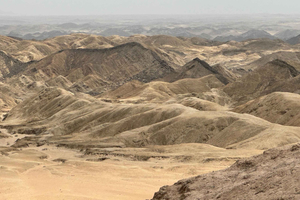
Remote, rugged and breathtakingly beautiful, Kaokoland is one of Namibia’s last great wilderness frontiers. Stretching across the far northwest of the country, this extraordinary landscape is defined by dramatic mountain ranges, ancient dry riverbeds, vast desert valleys and the life-giving Kunene River along the Angolan border.
Formerly known as the Kaokoveld, Kaokoland is now part of Namibia’s Kunene Region, but the historic name remains strongly associated with this wild and sparsely populated corner of the country. The area extends broadly from the Hoanib River in the south towards the Kunene River in the north.
A Land of Extraordinary Contrasts
At first glance, Kaokoland can appear almost completely barren. Rocky mountains, gravel plains and dry riverbeds dominate much of the landscape, and rainfall is scarce and unpredictable. Yet this seemingly harsh environment supports a remarkable variety of life. The permanent waters of the Kunene River create a green ribbon through the desert, with palms, trees and other riverine vegetation contrasting dramatically with the surrounding arid mountains. Further inland, seasonal rivers such as the Hoanib and Hoarusib provide important wildlife corridors. The landscape changes constantly as you travel through the region — from rocky desert and mountain passes to wide valleys, sand dunes, springs and lush pockets along the river. It is this combination of isolation and unexpected beauty that makes Kaokoland so unforgettable.
The Kunene River
The Kunene River is the lifeline of northern Kaokoland. Flowing along the border between Namibia and Angola, it is one of the few permanent sources of water in this otherwise extremely dry landscape. Communities, wildlife and vegetation have all developed around its presence. Along its course are some of Kaokoland’s most spectacular destinations, including Epupa Falls, where the river tumbles through a series of cascades surrounded by rugged cliffs, baobabs and palms. The river also creates opportunities for hiking, birdwatching, cultural experiences and simply enjoying the contrast between flowing water and the surrounding desert.
Epupa Falls
Few places demonstrate the contrasts of Kaokoland better than Epupa Falls. Located on the Kunene River at the Angolan border, the falls consist of a series of cascades extending for approximately 1.5 kilometres. The name "Epupa" is derived from a Herero word referring to the foam created by the falling water. Surrounded by dramatic rock formations and vegetation, Epupa is one of the region’s best-known attractions. Visitors can explore viewpoints, take guided walks, enjoy birdwatching and learn more about the local Himba culture. The area also has several lodges and campsites, making it one of the more accessible destinations within this remote region. Sunset at Epupa Falls is particularly spectacular, as the surrounding mountains and river are transformed by the warm evening light.
The Ovahimba of Kaokoland
Kaokoland is not only a wilderness destination — it is also the traditional homeland of the Ovahimba. The Himba are renowned for their distinctive cultural traditions and semi-nomadic pastoral lifestyle. Cattle and goats play an important role in their communities, while movement between settlements and grazing areas is closely linked to the availability of water and pasture. Visitors travelling through Kaokoland may encounter traditional settlements and have opportunities to learn about Himba culture through locally guided experiences. These encounters are an important part of visiting the region, but they should always be approached respectfully. Kaokoland is home to living communities, not an open-air museum, and responsible tourism should ensure that local people benefit from tourism while retaining control over how their culture is shared.
The Desert-Adapted Elephants
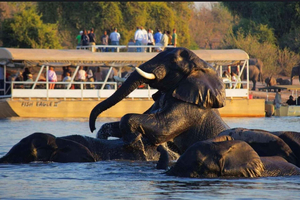
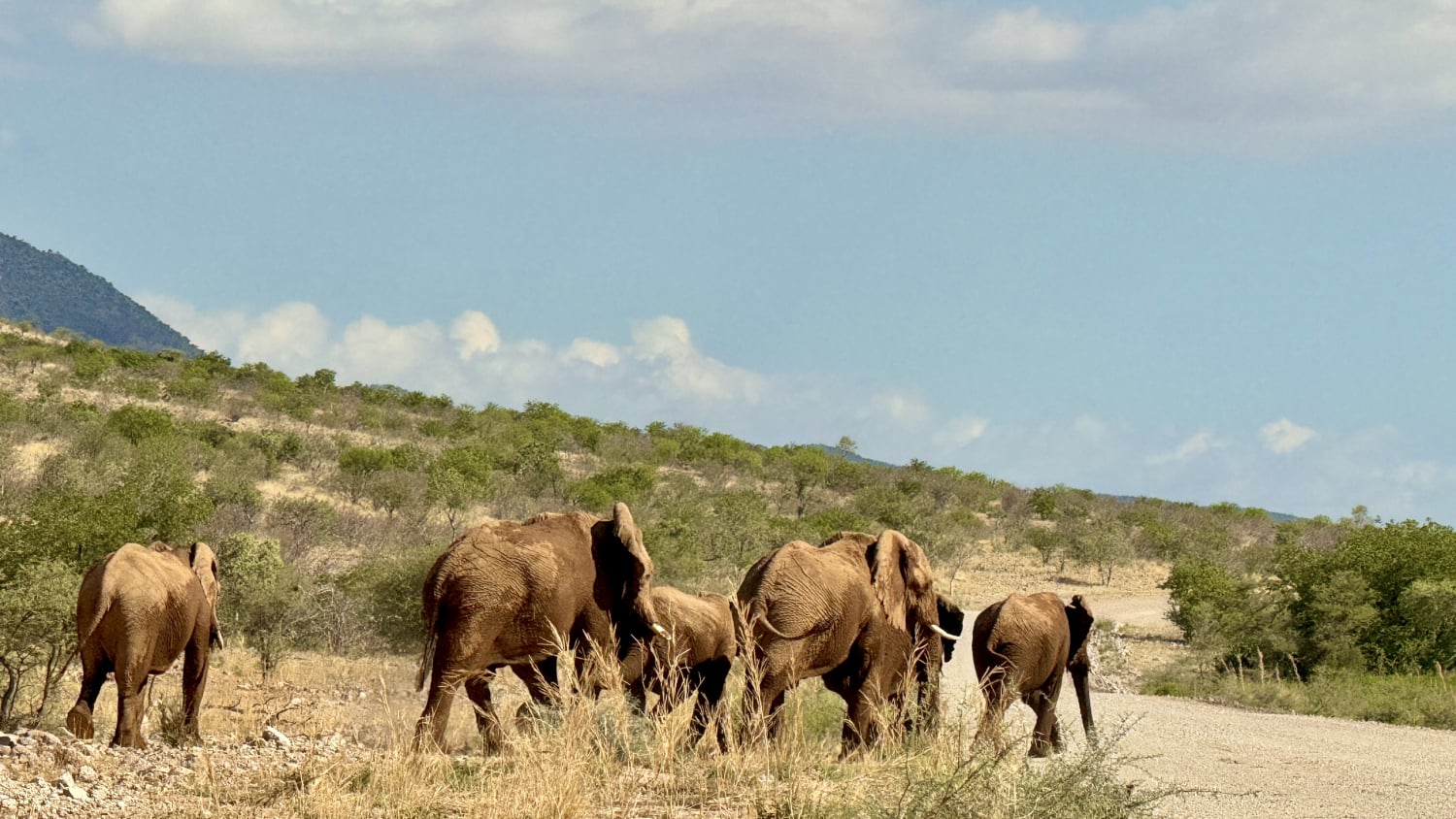
One of Kaokoland’s most extraordinary wildlife stories is that of its desert-adapted elephants. These are African bush elephants that have adapted their behaviour and movements to survive in an exceptionally dry environment. Rather than being a separate species, they are a distinctive population of elephants adapted to the conditions of the Namib and Kunene landscapes. The elephants can travel enormous distances between feeding areas and water sources. Dry riverbeds such as the Hoanib provide important corridors, while experienced local guides and conservation teams track their movements. Seeing one of these elephants moving silently through an otherwise seemingly empty desert is one of the great wildlife experiences Namibia can offer. The region's community conservancies also play an important role in protecting wildlife and creating opportunities for communities to benefit from tourism and conservation. Kunene is home to a large concentration of Namibia’s communal conservancies.
The Hoanib and Khowarib
The southern reaches of Kaokoland are characterised by spectacular dry river systems.
The Hoanib River is particularly important for wildlife, providing a natural corridor through the desert. It is famous for its desert-adapted elephant population and is one of the places where visitors can join guided tracking excursions. Further east, the dramatic Khowarib Gorge cuts through the landscape. The gorge provides spectacular scenery and forms an important route into the wider Kaokoland area. Travellers can stay at lodges such as Khowarib Lodge before continuing deeper into the remote northwest.
Hartmann’s Valley
For experienced 4x4 travellers, Hartmann’s Valley is among the most spectacular destinations in Kaokoland. This immense valley stretches for approximately 70 kilometres and is characterised by dramatic mountains, sand, gravel and almost otherworldly open landscapes. Access is challenging, with sections of difficult sand and rough tracks requiring proper preparation and driving experience.
The reward is an extraordinary feeling of isolation. There are no large developments or crowds here. Instead, travellers encounter vast open spaces where the scale of the landscape can be difficult to comprehend. Hartmann’s Valley is a destination for people who genuinely want to get away from it all.
The Marienfluss Valley
Neighbouring Hartmann’s Valley is the spectacular Marienfluss Valley. Compared with the harsher Hartmann landscape, Marienfluss can appear surprisingly green following good rains. The valley is characterised by broad open plains, sand, scattered vegetation and dramatic mountain ranges. The scenery changes dramatically according to rainfall and season. At times the valley can be covered in grasses; at other times, the landscape takes on a much more barren, desert-like appearance. The valley is also known for its distinctive circular bare patches, commonly referred to as fairy circles. For photographers and landscape enthusiasts, Marienfluss is one of Namibia’s truly exceptional wilderness destinations.
Van Zyl’s Pass
For serious off-road adventurers, few names in Namibia carry the reputation of Van Zyl’s Pass.
This remote mountain pass provides access between parts of northern Kaokoland and the Marienfluss area. It is considered a demanding 4x4 route and is not suitable for inexperienced drivers or ordinary rental vehicles. The pass is part of the adventure rather than simply a means of getting somewhere. Travellers attempting it should be properly equipped, experienced and prepared for remote conditions, and travelling with another vehicle or an experienced guide is strongly advisable.
Kaokoland rewards preparation — but it does not forgive carelessness.
Opuwo: Gateway to Kaokoland
The town of Opuwo is often regarded as the principal gateway to Kaokoland. Located in the heart of the Kunene Region, Opuwo is an important service centre and a fascinating place to experience the cultural diversity of northwestern Namibia. For many travellers, Opuwo marks the transition from conventional Namibia road travel into the more remote landscapes of Kaokoland. It is a useful place to refuel, replenish supplies and prepare before continuing deeper into the region.
Sesfontein and Fort Sesfontein
Towards the southern part of the region lies Sesfontein, another important gateway to Kaokoland. The settlement is known for its historic German fort, originally constructed in 1896 as a police outpost. The restored fort and surrounding palm trees provide an interesting contrast to the surrounding desert environment. Sesfontein is also an important stopping point for travellers heading towards Puros, the Hoanib region and the more remote areas of Kaokoland.
Wildlife Beyond the Elephants
Although desert-adapted elephants are among the region’s most famous animals, they are far from the only wildlife found here. Depending on the location and season, visitors may encounter oryx, springbok, giraffe, kudu, ostrich, mountain zebra and other desert-adapted species. The wider Kunene landscape is also home to rhino and lion. Wildlife viewing here is very different from visiting a conventional national park. Animals are scattered across an enormous landscape, and sightings are never guaranteed. This unpredictability is part of the experience. A successful wildlife encounter in Kaokoland feels earned. A Paradise for 4x4 Adventures - Kaokoland is one of Namibia’s ultimate destinations for 4x4 enthusiasts.
Many routes are remote, rough and sandy, with river crossings, rocky terrain, steep mountain passes and long stretches without services. Travellers need to be genuinely prepared for remote-area travel, including sufficient fuel, water, food, recovery equipment, spare tyres and reliable communication. Some of the most remote routes are best undertaken with an experienced guide or in convoy. For those properly prepared, however, the reward is extraordinary. Every kilometre takes you further away from the familiar and deeper into a landscape that feels almost untouched.
Camping Under the Kaokoland Sky
Camping is one of the best ways to experience the region. Away from towns and major developments, the night sky is spectacular. The absence of urban light pollution allows travellers to experience the stars in a way that is increasingly difficult to find elsewhere. A camp beside a dry riverbed, beneath enormous trees or near the Kunene River offers a sense of connection with the landscape that is difficult to reproduce in a conventional hotel. The silence is equally memorable. At night, Kaokoland can feel almost completely still.
When to Visit Kaokoland
The cooler, drier months are generally popular for exploring the region, particularly for travellers interested in wildlife and 4x4 adventures. However, Kaokoland changes considerably with the seasons. Rainfall can transform the landscape, while heavy rain can make dry riverbeds and remote tracks difficult or temporarily impossible to navigate. Because conditions can change quickly, travellers should check current road and weather conditions before setting out and should never underestimate the distances involved.
Is Kaokoland for Everyone?
Kaokoland is not necessarily the right destination for every traveller — and that is precisely what makes it special. If you are looking for smooth highways, frequent fuel stations, luxury shopping and easy access to every attraction, there are easier destinations in Namibia. But if you want space, silence, adventure, wildlife, culture and a genuine feeling of remoteness, Kaokoland is difficult to beat.
It is particularly suited to:
Adventure travellers
Experienced 4x4 drivers
Self-drive explorers
Photographers
Wildlife enthusiasts
Birdwatchers
Camping and overland travellers
Cultural travellers
Experienced hikers
Travellers seeking remote luxury lodges
Visitors returning to Namibia who want to explore beyond the classic tourist routes
Why Kaokoland Should Be on Your Namibia Bucket List
Kaokoland represents a side of Namibia that many visitors never experience. It is a land of enormous distances and extraordinary contrasts — where desert meets river, where elephants walk through dry riverbeds, where mountains rise from seemingly endless plains and where traditional communities continue to live closely connected to the land. From the Hoanib River and Khowarib Gorge in the south to Epupa Falls, Hartmann’s Valley and the Kunene River in the north, every part of Kaokoland offers something different. But perhaps Kaokoland’s greatest attraction is something that cannot be photographed or listed on an itinerary. It is the feeling of being truly far away. Far from traffic. Far from crowds. Far from city lights. And surrounded by a landscape that has remained wild for generations. Kaokoland is not simply a destination to visit. It is an adventure to experience.
Kaokoland at a Glance
Location: Far northwestern Namibia, within the Kunene Region
Border: Kunene River and Angola to the north
Main gateway: Opuwo
Other important areas: Sesfontein, Khowarib, Puros, Epupa, Marienfluss and Hartmann’s Valley
Landscape: Mountains, desert plains, dry riverbeds, valleys and riverine environments
Highlights: Epupa Falls, desert-adapted elephants, Himba culture, Kunene River, Hartmann’s Valley, Marienfluss Valley and 4x4 adventures
Best for: Adventure, wildlife, culture, photography, camping and remote wilderness experiences
Recommended vehicle: Properly equipped 4x4 for remote routes
Travel style: Self-drive expedition or guided safari
Kaokoland is Namibia at its wildest — and for travellers willing to venture beyond the familiar, it can become the most unforgettable part of the journey.
Kaokoland - FAQs for Visitors
Where is Kaokoland located in Namibia?
Kaokoland is in the far northwest of Namibia, along the border with Angola, within the Kunene Region.
What kind of landscape can I expect in Kaokoland?
Kaokoland features dramatic mountain ranges, ancient dry riverbeds, vast desert valleys, and the Kunene River.
Who lives in Kaokoland?
Kaokoland is home to the Himba people, one of Namibia’s indigenous communities known for their traditional lifestyle.
How can I access Kaokoland?
Access to Kaokoland is typically by 4x4 vehicles via rugged roads, and a few small airstrips serve charter flights from within Namibia.
Is it possible to visit the Kunene River in Kaokoland?
Yes, the Kunene River runs along the northern border of Kaokoland and is accessible for travel and exploration.
What wildlife might I see in Kaokoland?
Kaokoland supports wildlife such as elephants, lions, desert-adapted antelopes, and various bird species unique to Namibia’s northwest.
When is the best time to visit Kaokoland?
The dry season from May to September is the best time to visit Kaokoland for wildlife viewing and comfortable travel conditions.
Do I need a permit to visit Kaokoland?
A permit may be required for some protected areas in Kaokoland; check with Namibian authorities or local tour operators.
Can I stay overnight in Kaokoland?
There are limited lodges and campsites in Kaokoland that offer overnight stays, often booked in advance due to the area's remoteness.
What activities are popular in Kaokoland?
Popular activities include guided wildlife safaris, cultural visits with Himba communities, hiking, and river excursions along the Kunene River.